DOP, PDO, PGI: how to recognise genuine Italian productsImported Italian products in Aubagne: a guide to the labels
Read a label, spot fake Italian and ask the right questions at the table.
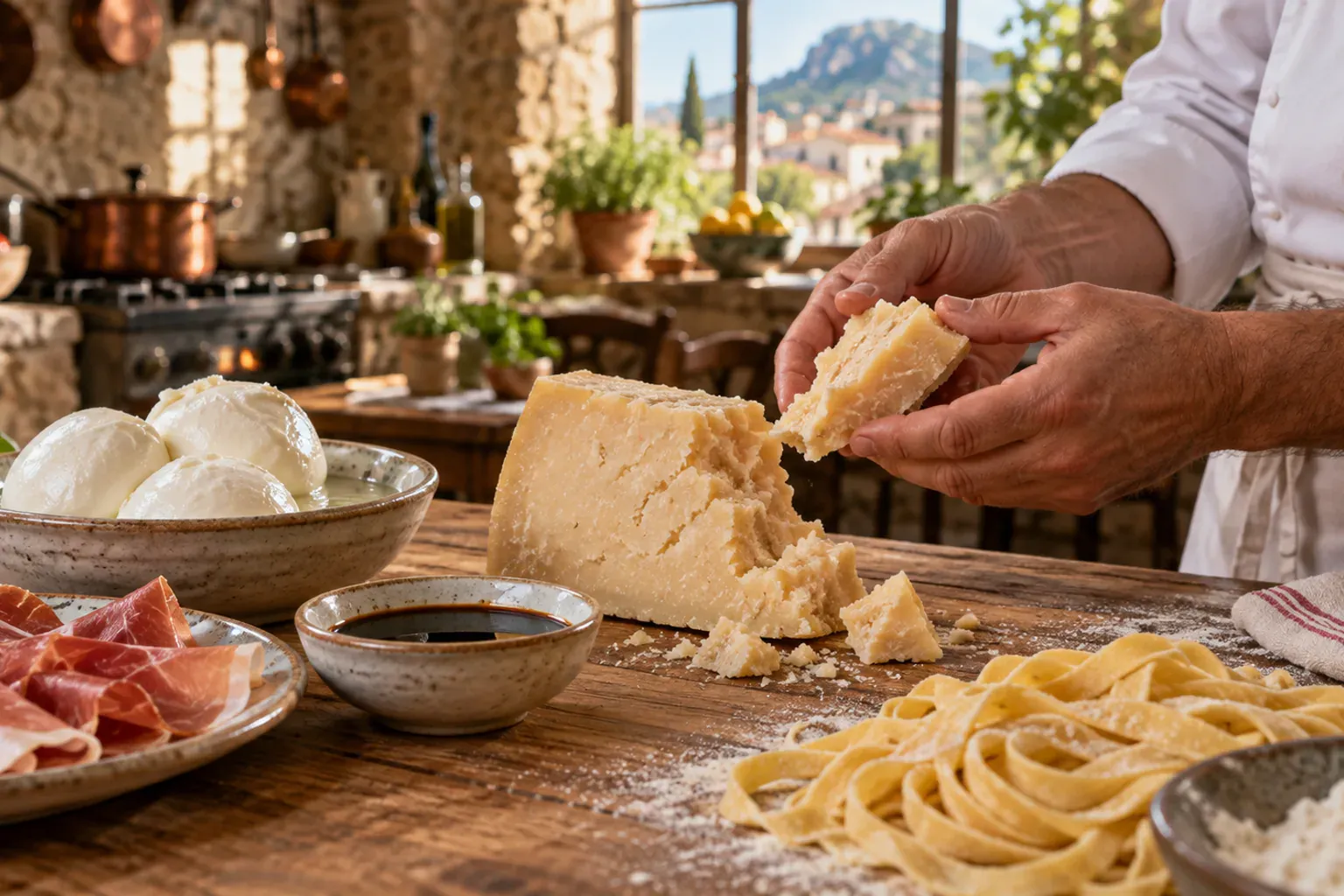
DOP (PDO) means every step happens in a defined area, PGI that at least one step does, TSG that a traditional recipe is protected. A flag or an Italian-sounding name guarantees nothing: check the exact name, the official logo, the ingredients and the country of origin.
Italian flags are everywhere on shelves and menus, yet much of what is sold as Italian never came from Italy.
This is called "Italian sounding". Reliable markers exist and take seconds to check.
This guide explains the labels, how to read a label and what to ask at a restaurant, with examples from the 100% homemade cooking in Aubagne at Pépé Zino.
Why does origin really change the taste?
Terroir, know-how and a product specification shape flavour.
San Marzano tomatoes grow on volcanic soil at the foot of Vesuvius: dense flesh, few seeds, gentle acidity.
The DOP specification protects both a place and a method.
A sauce made from them needs little sugar and little cooking.

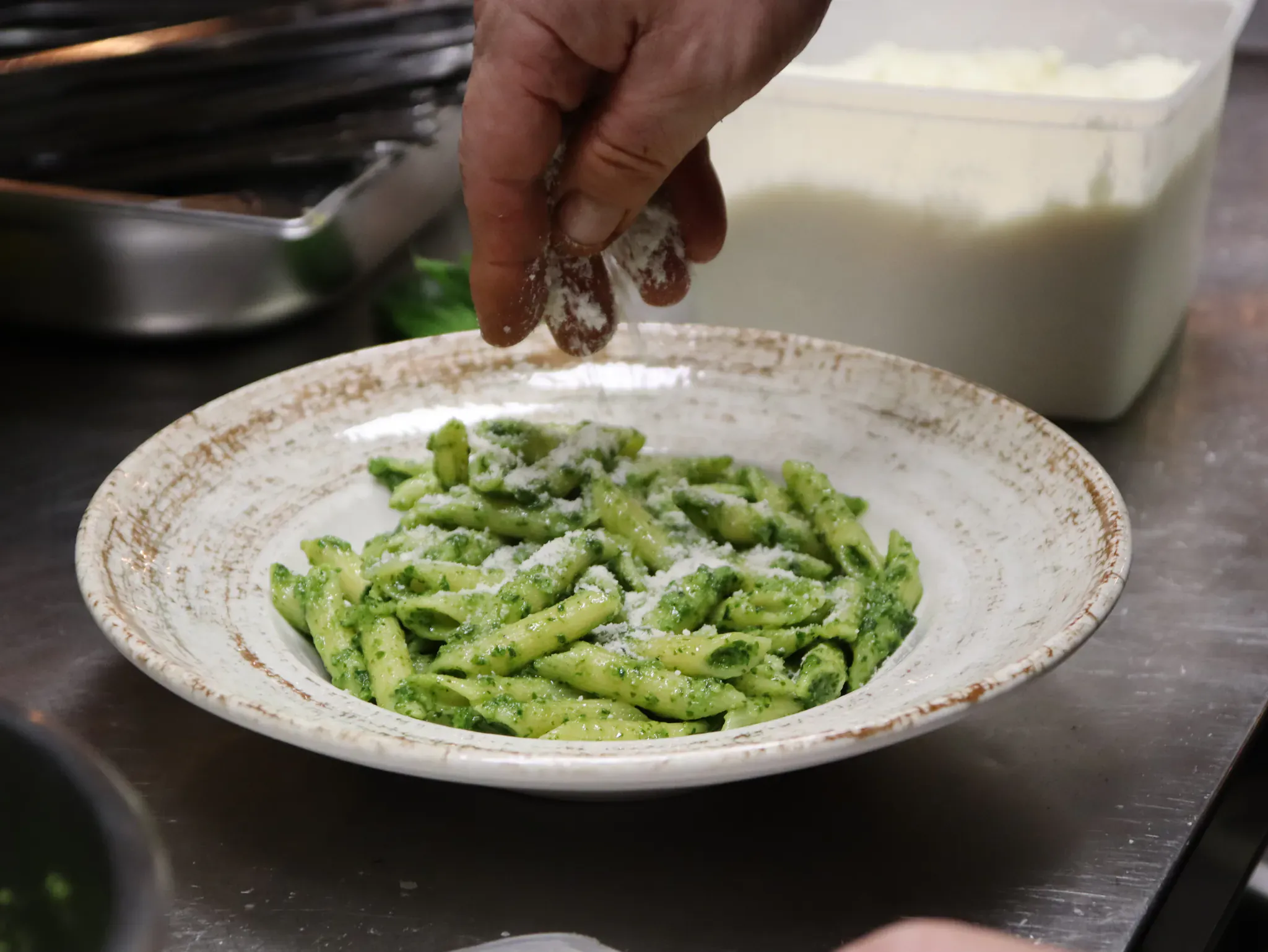
EU labels explained: what do DOP, PDO, PGI and TSG guarantee?
Three official EU signs protect products linked to an origin or a tradition.
DOP / PDO: everything within a defined area
All steps take place in the zone.
Examples: Parmigiano Reggiano, Pecorino Romano, San Marzano.
PGI: at least one step tied to the area
At least one step happens in the zone.
Examples: Bresaola della Valtellina PGI, Mortadella Bologna PGI.
TSG: a protected recipe, no geographic link
Protects a traditional method, not a place.
Example: pizza napoletana TSG.
Comparison table: DOP, PGI and TSG
| Criterion | DOP / PDO | PGI | TSG |
|---|---|---|---|
| Protects | Origin and know-how | Origin and reputation | Recipe or method |
| Link to area | All steps | At least one step | None |
| Logo | Red and yellow | Blue and yellow | Blue and yellow, TSG |
| Examples | Parmigiano Reggiano, Pecorino Romano, San Marzano | Bresaola della Valtellina, Mortadella Bologna | Pizza napoletana, mozzarella TSG |
| Strictness | Highest | Intermediate | Method, not place |

What is "Italian sounding" and how to avoid the trap?
Products that evoke Italy without coming from it: flags, Italian-sounding names, gondolas.
In the EU, "parmesan" must be Parmigiano Reggiano, but "parmesan-style" products are not.
"Italian-style" describes an intention, not an origin.
How to read the ingredients and country of origin?
A few reflexes, at the shop or in front of a menu.
Look for the exact name
"Type", "style" or "flavour" are warning signs.
Spot the official logo
Red/yellow for PDO, blue/yellow for PGI and TSG.
Read the ingredients
Genuine products have few ingredients.
Check the origin
An Italian brand can pack products from elsewhere.
The 6 Italian products to know and recognise
Six products, and the most imitated ones.

San Marzano DOP tomato
Whole peeled or fillets, DOP logo.
Parmigiano Reggiano
Dotted lettering around the rind.
Pecorino Romano
Sheep’s milk, salty: the soul of carbonara and cacio e pepe.
Extra virgin olive oil from Puglia
Origin "Italy" must be explicit.
Prosciutto di Parma
Five-pointed ducal crown branded on the rind.
Burrata
Freshness first: eat it quickly.

5 questions to check a kitchen uses genuine Italian products
A kitchen that chooses its products likes to talk about them.
- 1
Where does your tomato come from?
A precise answer is a good sign.
- 2
Which cheese goes in the carbonara?
Pecorino Romano, and no cream.
- 3
Which cured meats do you serve?
Precise names, not an "assortment".
- 4
Which olive oil do you use?
The region should be known.
- 5
What is made on site?
Good produce and homemade go together.
For other signs, read our article on recognising a real Italian restaurant on the Pépé Zino blog. And for trattoria vs osteria, see our guide to Italian restaurant types.
What it means on the plate at Pépé Zino, in Aubagne
Carbonara with guanciale and Pecorino Romano, no cream; cacio e pepe with just pasta, pecorino and pepper.
Antipasti board with prosciutto di Parma, mortadella di Bologna and bresaola, fresh burrata and Puglia olive oil; margherita on San Marzano sauce.
Discover our trattoria and its homemade cooking, or start with our antipasti to share.

FAQ about Italian products
Are parmesan and Parmigiano Reggiano the same?
DOP and PDO: what is the difference?
Is a mozzarella without a label necessarily fake?
How can I tell if an olive oil is really Italian?
Where to taste imported Italian products near Aubagne?
Further reading
Come and taste the difference, dine-in only, at our trattoria Aubagne.
Come and taste the difference
The simplest way to understand is to taste. Dine-in only, 7 days a week in Aubagne.
You can also book online via the contact page.