
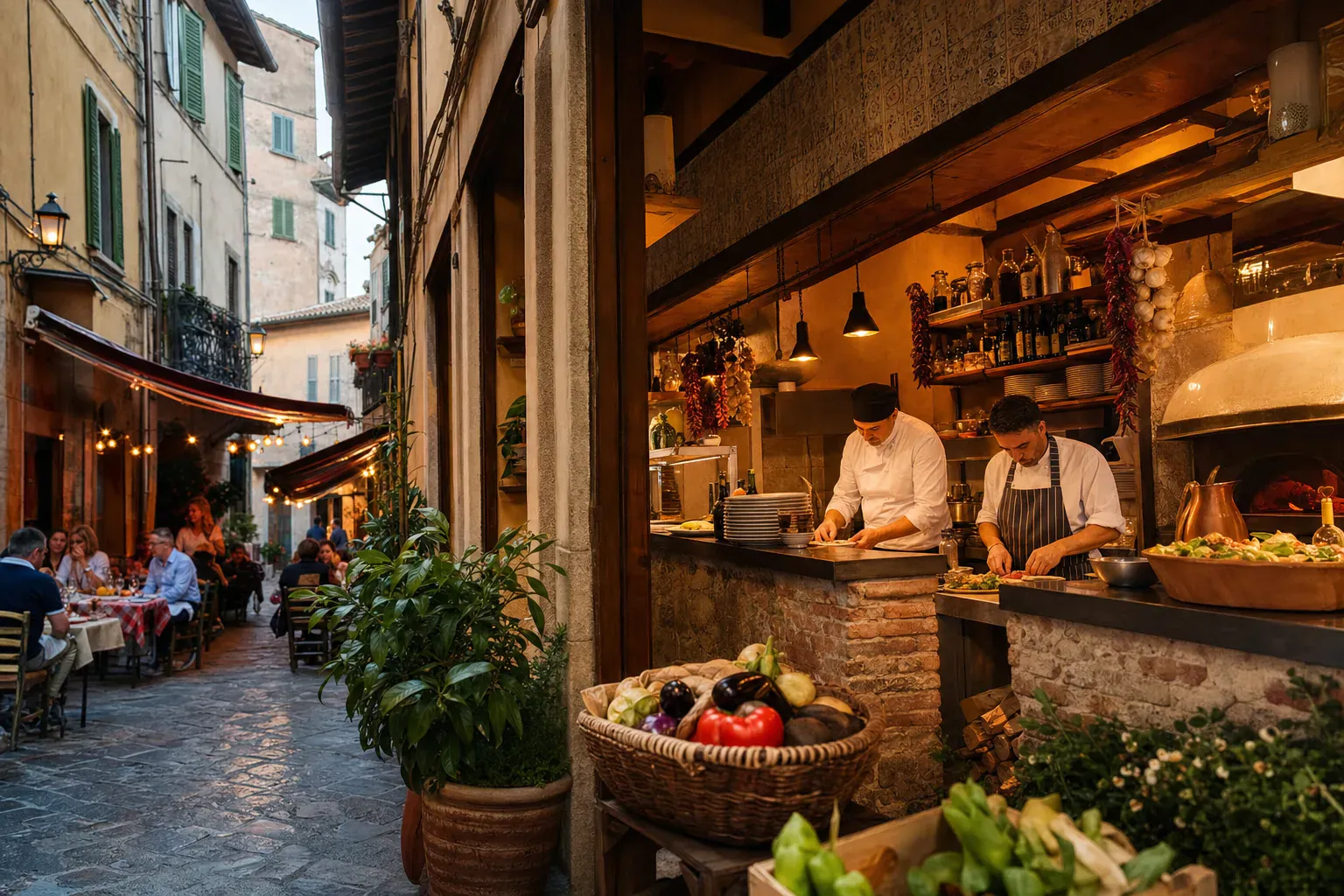
Trattoria, ristorante, osteria: the difference between Italian restaurants
Trattoria, ristorante, osteria, pizzeria are not simple synonyms. A cultural decoding of each type of Italian restaurant — origins, atmosphere, menu and service.
A trattoria is the everyday family table: short menu, homemade cooking, convivial mood. A ristorante is more formal, with a broader menu and refined service for special occasions. An osteria was originally a wine tavern, now a place of rustic, regional dishes. A pizzeria is defined by Neapolitan pizza. In France these words are sometimes marketing: judge an address by its produce and on-site cooking, not by its sign.
Why Italian restaurants have different names
On an Italian storefront, "trattoria", "ristorante", "osteria" and "pizzeria" are not interchangeable — each tells a story and a way of hosting.
These names grew over centuries around real habits: who cooked, what was drunk, for which occasion people came. One place can even claim several identities at once.
This guide decodes each term — origins, atmosphere, menu and service — so you know at a glance which kind of Italian house you are entering.
The trattoria: the everyday family table
Origins and spirit
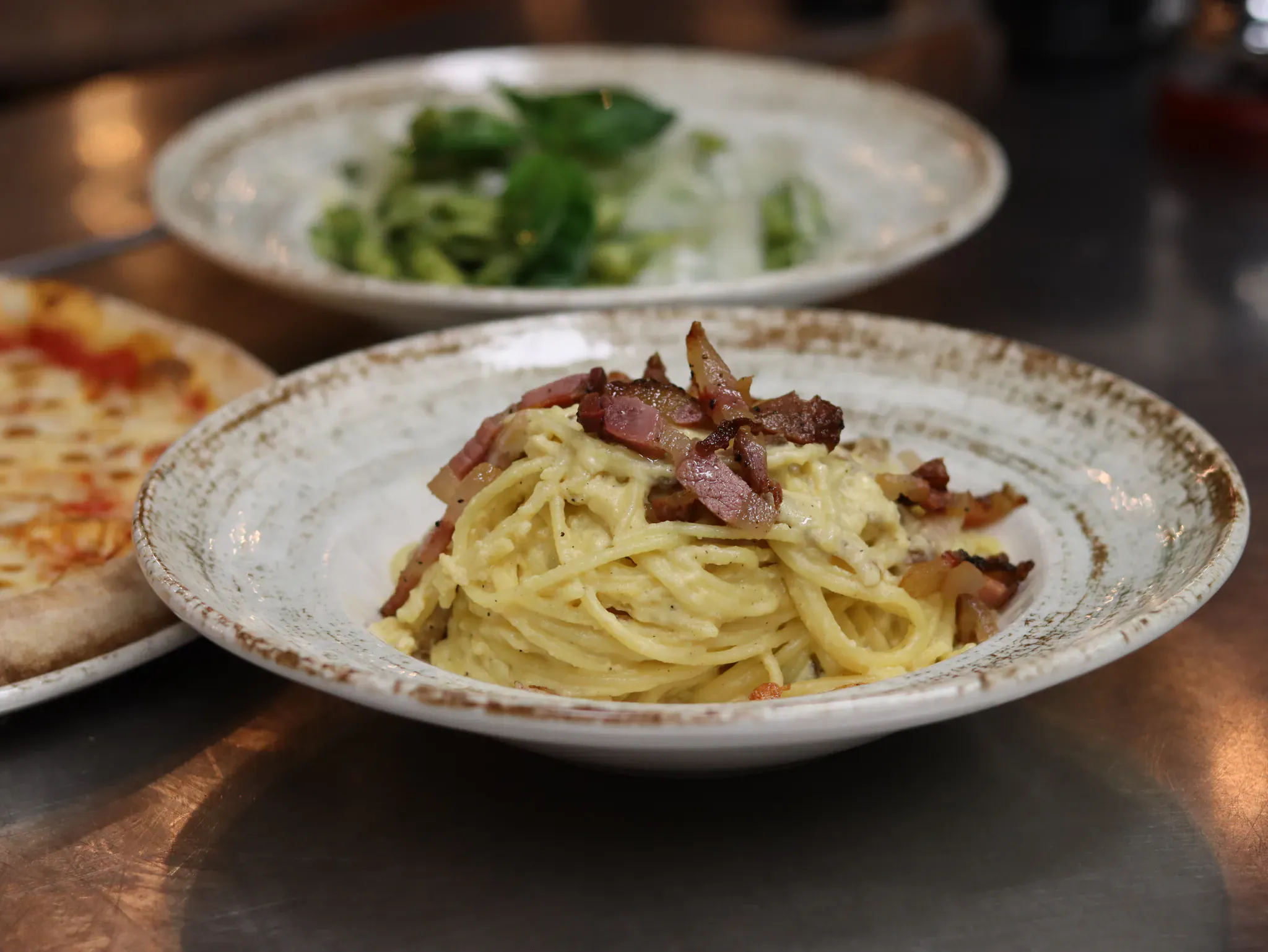
Historically, the trattoria is the everyday family table: simple, generous, affordable food, often run by the same family for generations.
Its spirit is conviviality, seasonality and homemade cooking. The menu is deliberately short because it follows the market.
What you eat and the atmosphere
Classics rule: shared antipasti, fresh pasta, slow-cooked dishes, homemade desserts. Generous portions, warm direct service, tables close together.
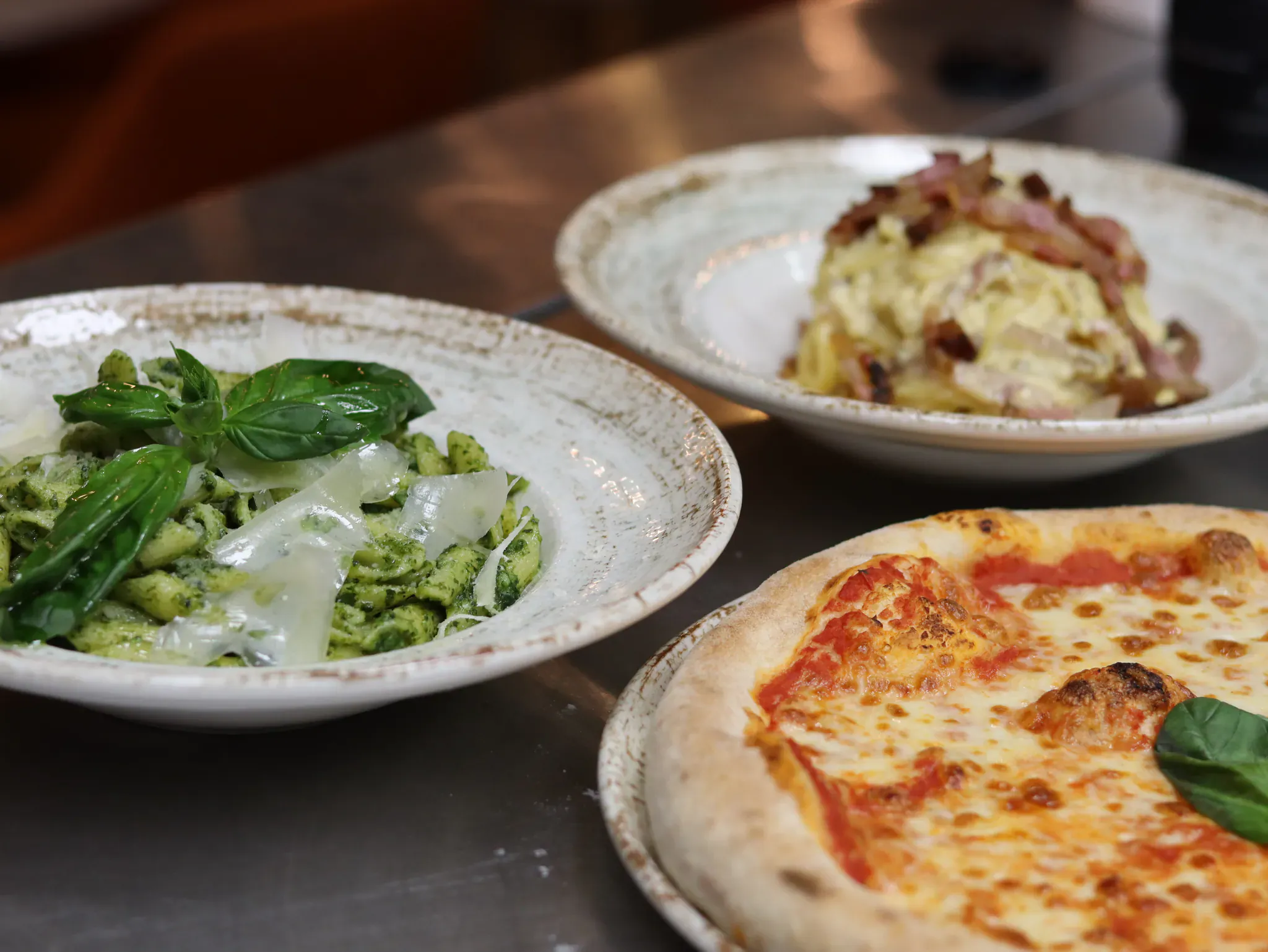
This is exactly the balance we cultivate at our family trattoria in Aubagne: an Italian brigade, pasta rolled each morning and a menu held with consistency. A trattoria is a promise of honest cooking, not a prestige label.
The ristorante: the more formal meal
Service, broader menu, occasions
The ristorante is the "restaurant" in the full sense: more formal, with a broader, more stable menu, often a real wine list and structured table service.
You go for an occasion — a business dinner, a celebration, a meal to savour. Plating is more refined and the pace more measured.
It is not "better" than a trattoria, simply a different register: everyday conviviality versus a staged moment.
The osteria: from wine to simple dishes
History: originally a place to drink
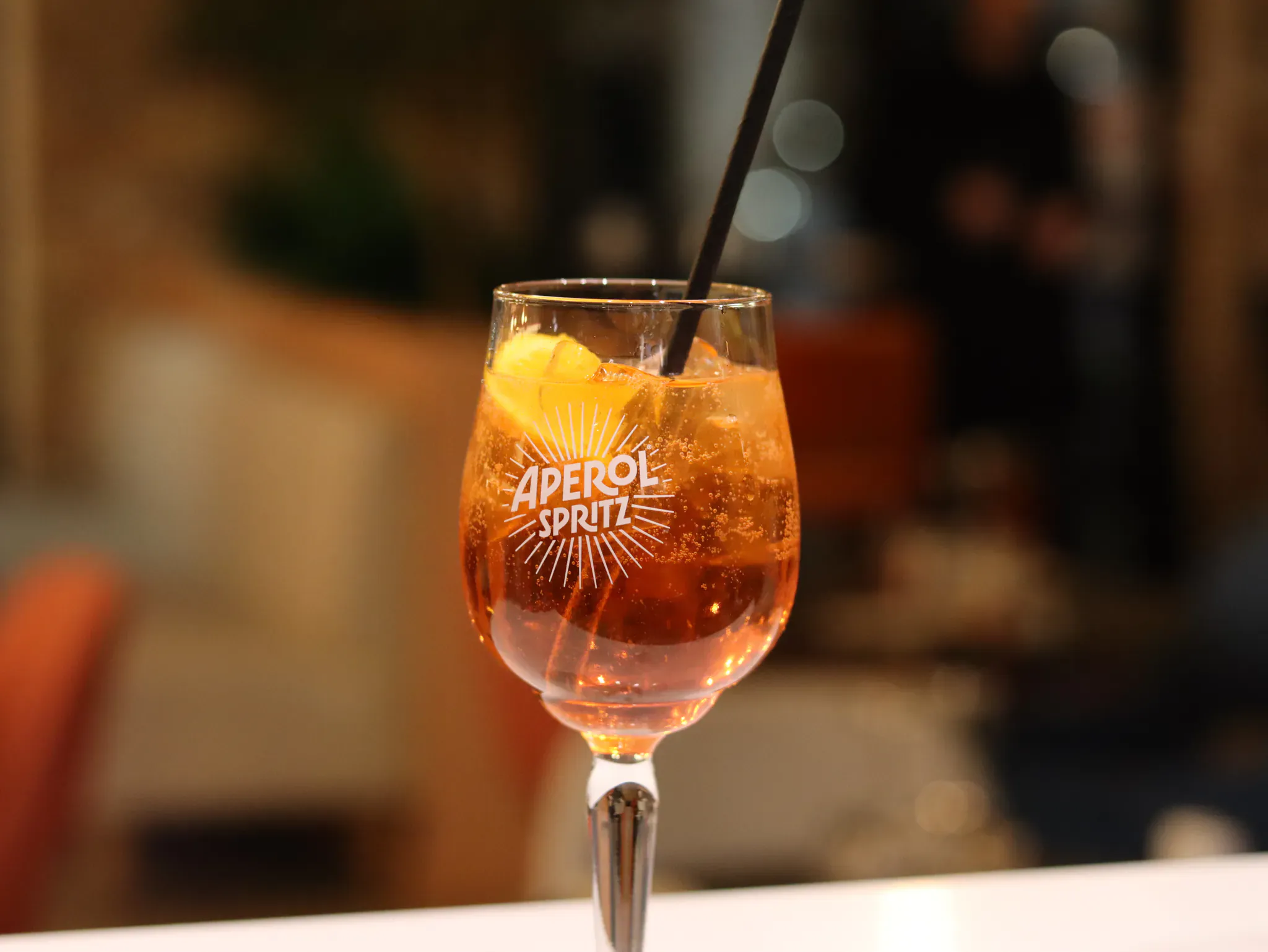
Originally an osteria was a neighbourhood tavern for drinking local wine, with a few simple dishes to go with the glass.
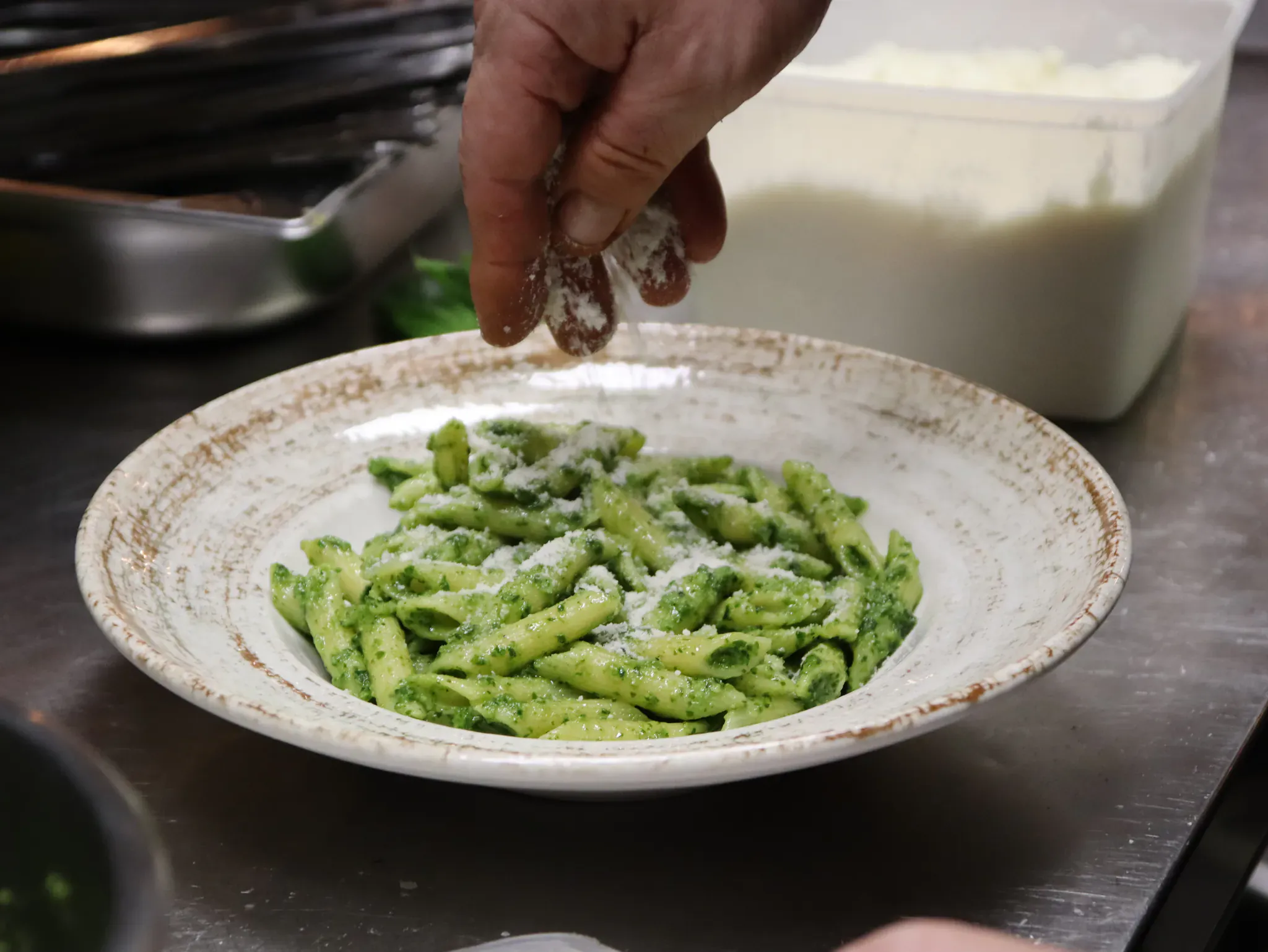
Over time many started serving real, often very rustic and regional cooking. Wine still keeps a central place.
In modern Italy the line between osteria and trattoria has blurred, but the word keeps an aura of authenticity and simplicity.
The pizzeria: the Neapolitan specialty
Pure pizzeria or pizzeria-restaurant
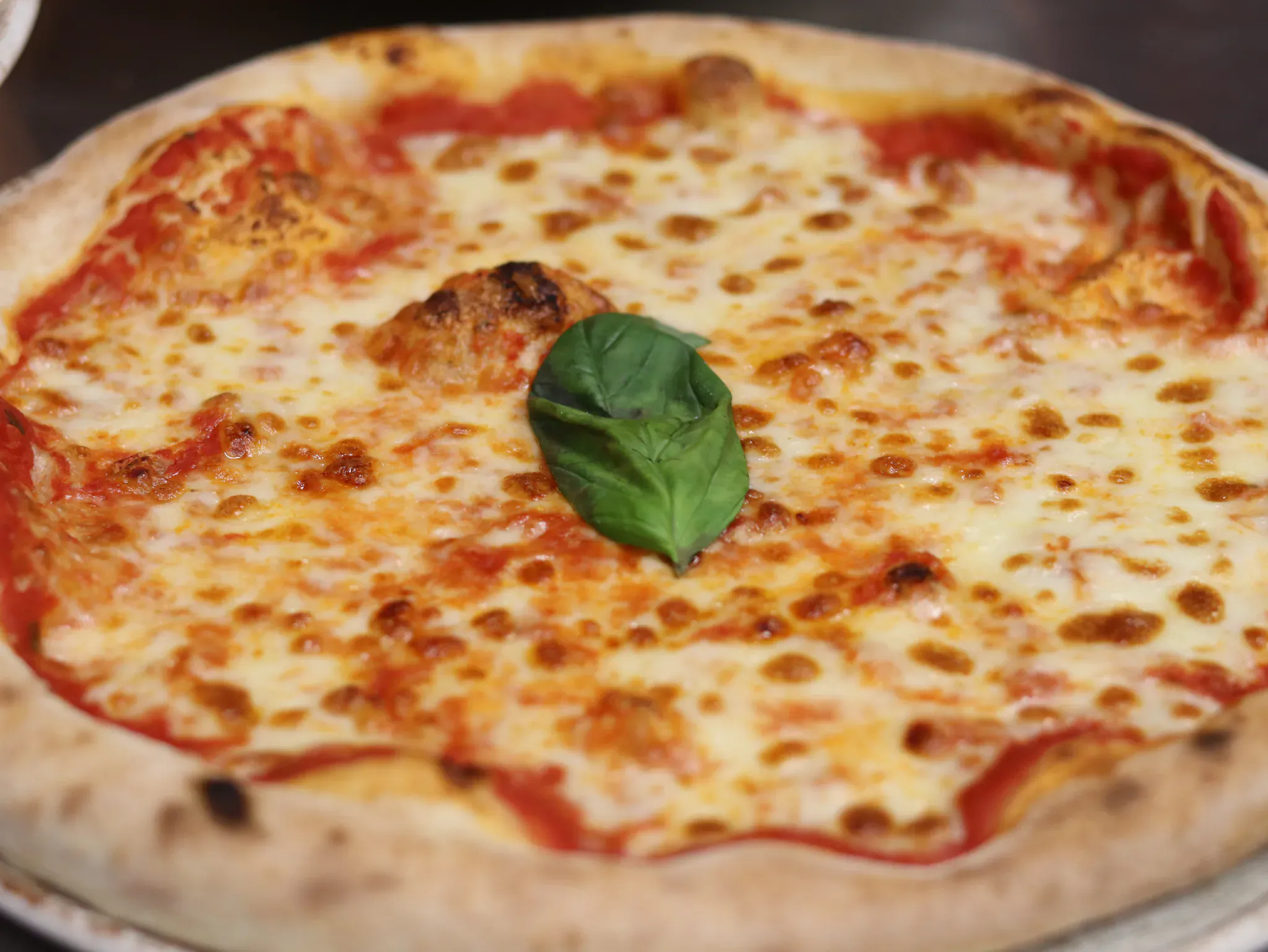
A pizzeria is defined by pizza, born in Naples: long-proofed dough baked at very high heat in a wood oven, topped with restraint.
Many places are "pizzeria-ristorante" or "pizzeria-trattoria", serving pizza alongside pasta and dishes — common in France.
Pizza deserves its own chapter. Dough, baking, ingredients: a dedicated article explains how to recognise a real Neapolitan pizza.
Comparison table: menu, atmosphere, service, occasion
At a glance, here is how these four types differ. These are cultural tendencies, not absolute rules: each address matters more than its sign.
| Type | Menu | Atmosphere | Service | Occasion |
|---|---|---|---|---|
| Trattoria | Short, seasonal, homemade | Family, relaxed | Direct and warm | Everyday family meal |
| Ristorante | Broad, stable, wine list | Elegant, calm | Structured, table service | Celebration, refined dinner |
| Osteria | Rustic, regional, wine-led | Convivial, no fuss | Simple and direct | Drinks with friends |
| Pizzeria | Pizza (sometimes pasta) | Lively, popular | Fast | Casual outing |
In France and Provence: what these words really mean
In France these words carry romance but not always their original meaning. A sign may read "trattoria" or "osteria" without the cooking being truly homemade.
So look past the storefront and at the kitchen. A real trattoria proves itself through a short coherent menu, identifiable produce and on-site cooking.
The right reflex is to read the whole address, not just the label — where the produce comes from, who cooks. To go deeper, see how to recognise authentic Italian cuisine.
How to place an Italian address near you
Beyond the label, a few concrete markers let you place any Italian address. Three criteria in particular never lie.
The menu
Short and coherent, following the seasons rather than trying to offer everything. An endless menu often signals delivered rather than cooked dishes.
The provenance
Oil, tomatoes, cheeses, charcuterie: a good house owns the origin of its produce and can talk about it.
On-site cooking
Rolled pasta, simmered sauces, pizzas baked to order: living cooking is felt on the plate more than on the sign.
Frequently asked questions
Is a trattoria cheaper than a ristorante?
What is the difference between osteria and trattoria?
Can you eat pizza in a trattoria?
How can you recognise a real trattoria?
What exactly is a ristorante?
Do these words mean the same in France as in Italy?
Want to live the trattoria spirit at the table rather than in books? Discover trattoria Aubagne, our family house in the heart of Aubagne where the Italian brigade cooks everything on site.
Come live the trattoria spirit at the table
Fresh pasta rolled every morning, Neapolitan pizzas and a warm welcome: book your table at Pépé Zino in Aubagne.
Booking by phone, 7 days a week