
Fresh vs dried pasta: what is the difference, and which shape goes with which sauce?
Egg-based pasta fresca or durum-wheat pasta secca: two families, two crafts, and precise pairings with every sauce.
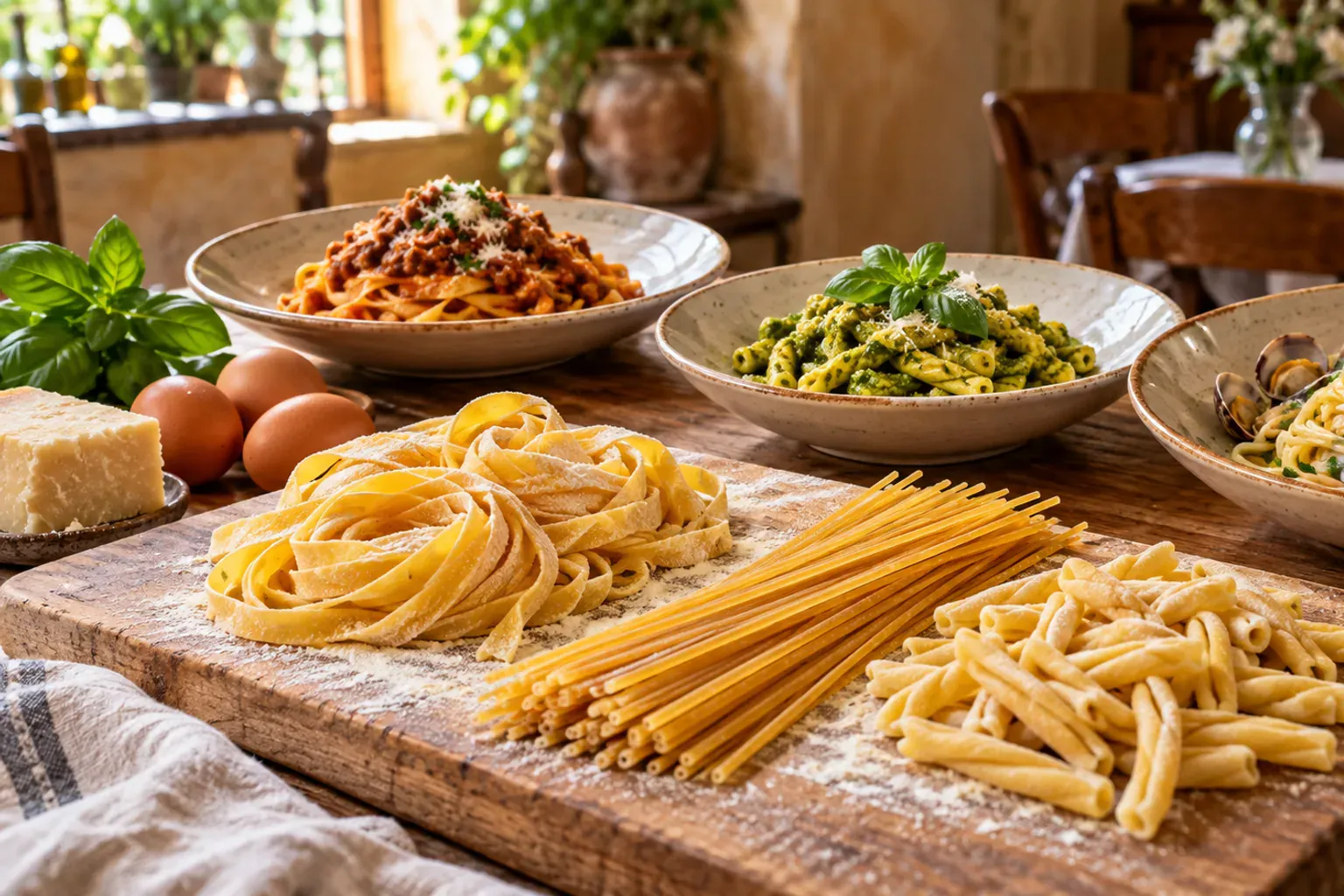
Fresh pasta is not "better" than dried pasta: they are two different products. Fresh pasta (soft "00" flour and eggs) comes from northern Italy, cooks in 2 to 4 minutes and loves butter, cream and ragù. Dried pasta (durum wheat semolina and water, bronze-extruded and slowly dried) comes from the South and pairs with olive oil, tomato, cheese and seafood. Always choose the pasta according to the sauce.
"Fresh pasta is always better": a common myth
In Italy, fresh and dried pasta have shared the table for centuries; each has its own sauces. By the end of this guide you will be able to recognise, choose and pair them.

Fresh and dried pasta: two products, two crafts
Fresh pasta (pasta fresca): soft flour and eggs
Made with "00" soft wheat flour and eggs, rolled and cut the same day, fresh pasta is supple and porous. It is a northern tradition (Emilia-Romagna, Piedmont).
Dried pasta (pasta secca): durum wheat and water
Durum wheat semolina and water, extruded through bronze dies and slowly dried: the rough surface grips the sauce. It is a southern tradition (Campania, Gragnano).
For origin labels, see our article on imported Italian products.
Comparison table
The key differences at a glance.
| Criterion | Fresh pasta | Dried pasta |
|---|---|---|
| Ingredients | "00" flour and eggs | Durum semolina and water |
| Cooking | About 2 to 4 minutes | 8 to 12 minutes |
| Ideal sauces | Butter, cream, ragù | Olive oil, tomato, seafood |

Which one is "better"? A false debate
Neither: it all depends on the sauce. Carbonara traditionally uses dried spaghetti or rigatoni, while ragù alla bolognese calls for fresh tagliatelle.
Al dente depends on the family
Dried pasta keeps a firm core; fresh pasta should be tender and supple, never mushy.
Which pasta shape with which sauce? The pairing guide
Every shape is designed to hold a certain kind of sauce.

Long, thin pasta: spaghetti, linguine
Fluid sauces: olive oil, seafood, cacio e pepe, vongole.
Fresh ribbons: tagliatelle, pappardelle
Rich sauces: ragù, cream, mushrooms.
Short, hollow pasta: rigatoni, penne, casarecce
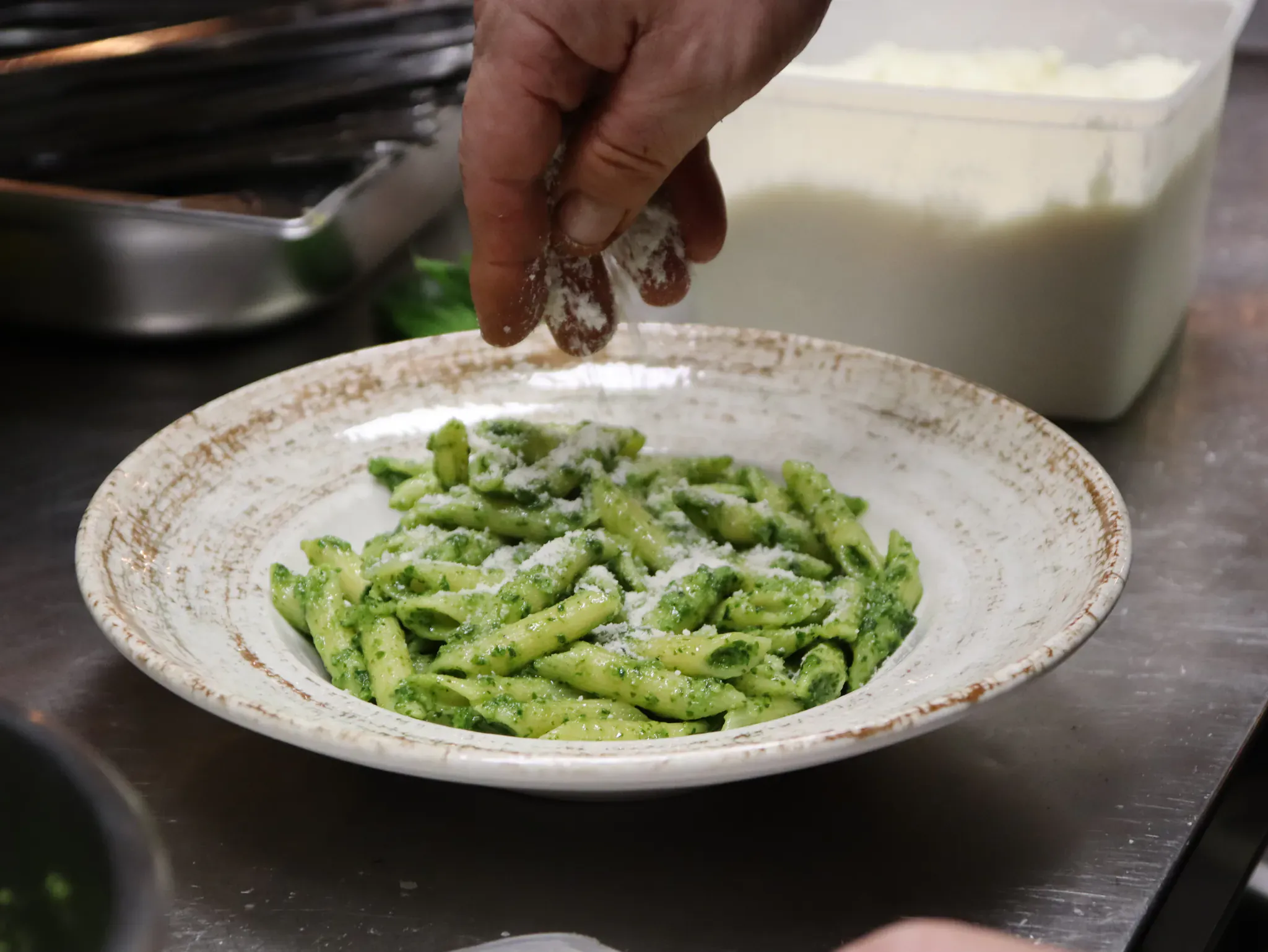
Thick sauces, pesto, carbonara.
Filled pasta: ravioli, tortellini
Light sauces: butter and sage, broth. Risotto is another story.
What about gnocchi?
Made from potato and flour, gnocchi are a case apart. Discover our homemade gnocchi in Aubagne.

Roman and southern classics decoded
Origin, traditional pasta and common mistakes for the great classics.
Cacio e pepe
- Origin
- Rome and Lazio.
- Traditional pasta
- Tonnarelli or spaghetti.
- Common mistake
- Adding cream: only pecorino, pepper and pasta water.
Carbonara
- Origin
- Rome.
- Traditional pasta
- Dried spaghetti or rigatoni.
- Common mistake
- Bacon and cream instead of guanciale, egg yolks and pecorino.
At Pépé Zino, carbonara with guanciale and cacio e pepe are served in their original versions.
How to spot truly homemade pasta in a restaurant
Look at the plate and the menu, and ask questions.
Visible signs
- Slightly irregular shape and natural colour.
- A short menu mentioning "fatte in casa".
Questions to ask
- Which pasta is made on site?
- When is the dough prepared?
A serious restaurant answers without hesitation.
At Pépé Zino, the Italian brigade prepares the dough every day: the principle of 100% homemade cooking in our Aubagne trattoria.

How to order pasta in an Italian restaurant
A few simple customs to enjoy your plate the Italian way.
A primo, not a single course
Pasta comes after antipasti and before the secondo.
No parmesan on seafood
Cheese overwhelms delicate seafood.
Find more on our blog, and read our guide to trattoria, ristorante and osteria.
Wine: crisp white for seafood pasta, supple red for ragù; a dedicated article is coming soon.
Fresh or dried pasta: key takeaways
It is a question of nature, not quality: always start from the sauce.
Want to taste the difference? Today's pasta awaits you in our trattoria in Aubagne, made daily by our Italian chefs. Browse our menu.
Frequently asked questions
Is fresh pasta higher in calories?
Why does fresh pasta cook faster?
Can carbonara be made with fresh pasta?
What is bronze extrusion?
Are gnocchi pasta?
How can I tell if a restaurant makes its own pasta?
See these principles in action at our trattoria Aubagne, where the Italian brigade makes pasta every day.
Want to taste the difference?
Today's pasta awaits you in our trattoria in Aubagne, made daily by our Italian chefs.
Booking by phone, 7 days a week