
Neapolitan vs Roman pizza: dough, baking and taste, what really sets them apart
A puffy, soft crust on one side, a thin crackling disc on the other: two schools, two philosophies.
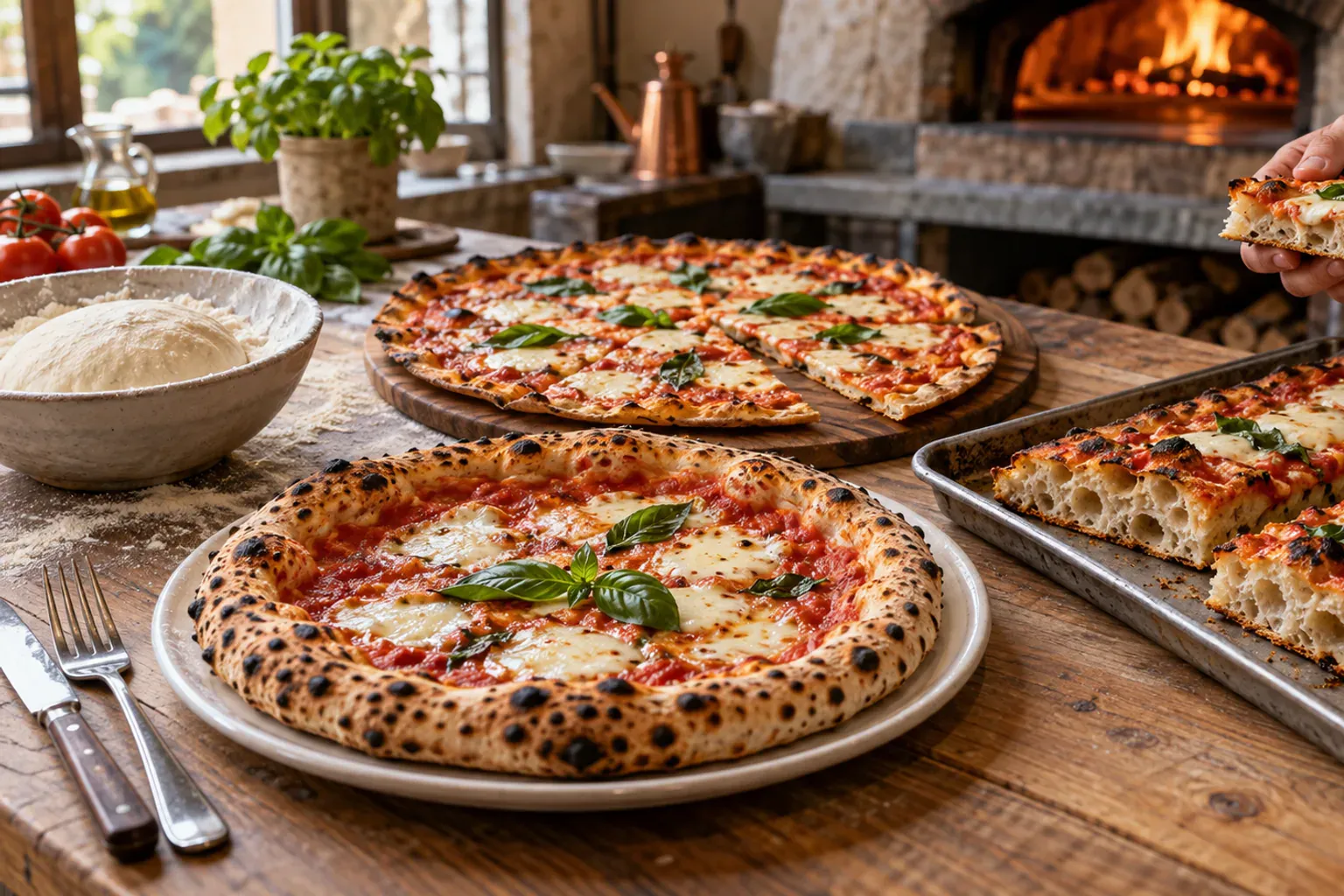
Neapolitan pizza (an EU Traditional Speciality Guaranteed) has no fat in the dough, a long fermentation and bakes for about 60 to 90 seconds in a very hot oven: puffy rim, soft centre. Roman "tonda" pizza contains olive oil, is rolled thin and bakes longer at a lower heat until crisp. Pizza al taglio and pinsa use highly hydrated, airy doughs.
We say "pizza", but Italy has several schools
Naples and Rome each developed their own pizza. This guide covers history, dough, baking, toppings and how to choose.

Two cities, two pizza philosophies
Naples, birthplace of pizza
Marinara is the oldest recipe; Margherita dates, by tradition, to 1889 and Queen Margherita of Savoy.
Rome: the crisp tonda and pizza al taglio
Roman tonda is thin and crackling ("scrocchiarella"); pizza al taglio is baked in trays and sold by weight.
Official recognition
"Pizza Napoletana" is an EU TSG; in 2017 UNESCO listed the art of the Neapolitan pizzaiolo as intangible heritage.
The dough: where it all happens
Ingredients
Type 00 or 0 flour, water, salt, yeast. No fat in Neapolitan dough; a drizzle of olive oil in Roman dough.
Hydration and fermentation
A long fermentation makes the dough more aromatic and generally easier to digest.
Shaping
Neapolitan dough is stretched by hand, pushing air to the rim (cornicione); Roman dough is often rolled thin.
The same logic applies to pasta: see our article on fresh vs dried pasta.


Baking: temperature, time and oven
Different dough, different oven.
Neapolitan
Very hot oven, about 60 to 90 seconds: leopard-spotted rim, soft centre.
Roman
Lower heat, two to three minutes: dry and crisp.
Al taglio and pinsa
Baked in trays or oval shapes, with an airy crumb.
Comparison table: Neapolitan, Roman, al taglio, pinsa
Key differences at a glance (orders of magnitude).
| Criterion | Neapolitan | Roman | Al taglio | Pinsa |
|---|---|---|---|---|
| Texture | Soft centre | Crisp | Airy crumb | Crisp, light |
| Oil in dough | No | Yes | Usually | Usually |
| How to eat | Knife and fork or folded | By hand | By hand | By hand |
Pinsa romana is a modern creation from the early 2000s.

Toppings: less but better
Neapolitan restraint
San Marzano tomato, fior di latte or buffalo mozzarella, basil, olive oil.
On labels, see imported Italian products.
Classics to know
Tomato, garlic, oregano, olive oil.
Tomato, mozzarella, basil.
Common mistakes in France
Too much cheese and pre-baked industrial dough. Learn more in our article on Italian pizza.
How to eat a Neapolitan pizza like in Naples
Eat it straight out of the oven, at the table.
Knife and fork
For the soft centre.
Folded "a portafoglio"
Folded like a wallet and eaten by hand.
Which pizza suits your taste?
A few pointers.
Soft lovers
Go Neapolitan.
Crunch lovers
Go Roman or tray-baked.
See also our guide to trattoria, ristorante, osteria and pizzeria.

And at Pépé Zino?
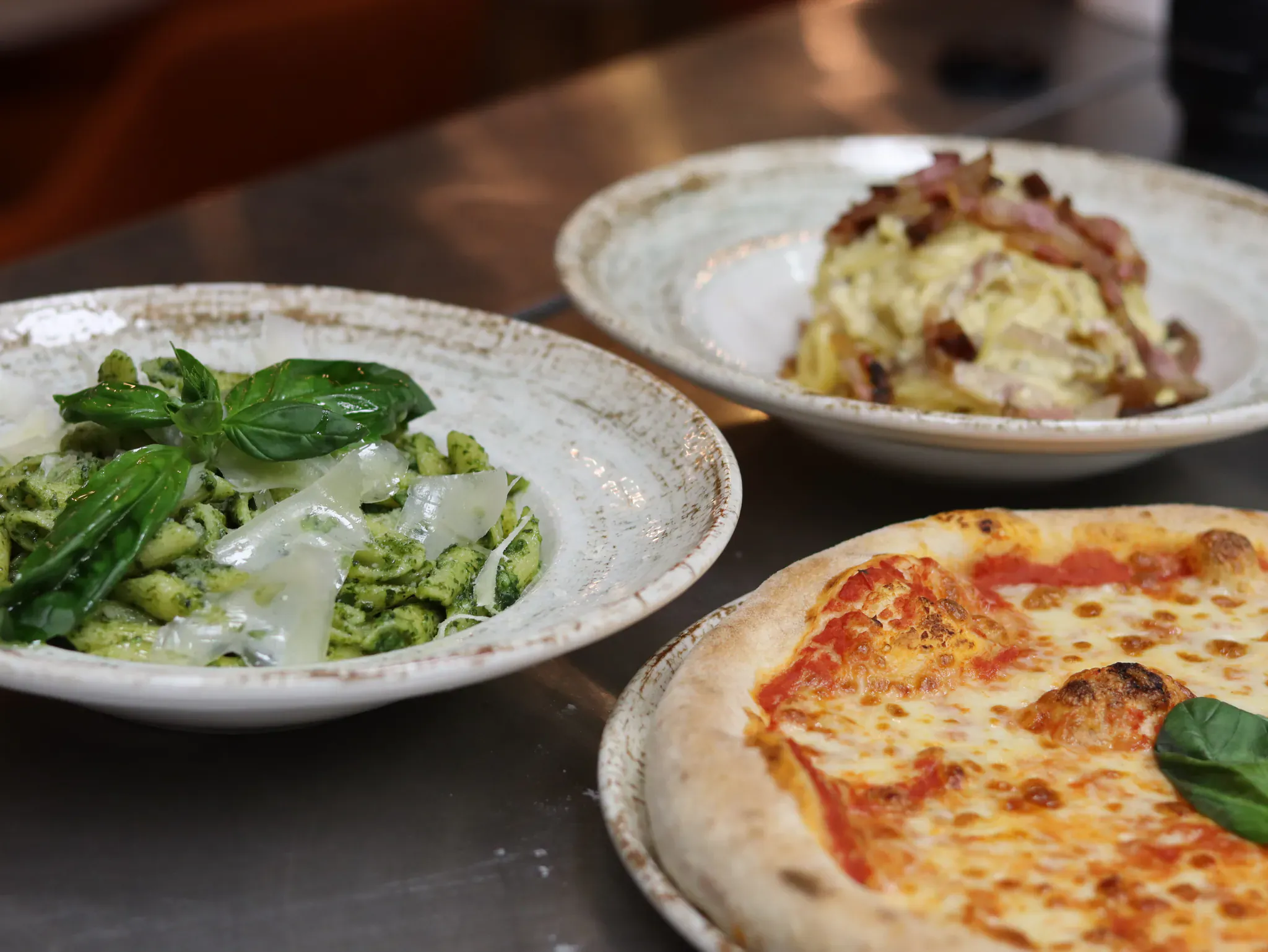
We follow the Neapolitan school: dough made on site by our Italian chefs, pizzas served at the table straight from the oven, products imported from Italy.
Discover our Neapolitan pizzas made on site, or the spirit of 100% homemade cooking.
Frequently asked questions
What is the difference between Neapolitan and Roman pizza?
Why is Neapolitan pizza soft in the centre?
Is Neapolitan pizza easier to digest?
What is pinsa romana?
What is a TSG pizza?
How long does a Neapolitan pizza bake?
Browse our menu and book your table.
See these principles in action at our trattoria Aubagne, where our Italian chefs prepare everything on site.

Ready for a real Neapolitan pizza?
Dough made on site, puffy rim, melting centre: served at the table straight from the oven.
Booking by phone, 7 days a week